What needs to change?
Identify poor flow, low bulk density, entrained air or inconsistent feeding. Record the current powder behavior and the downstream problem you want to solve.
DRY GRANULATION / PURCHASE GUIDE
Start with your powder
Build the right process
Choose equipment around the granules you need, the output you can use and the trial that proves the fit.
WHAT YOU ARE BUYING
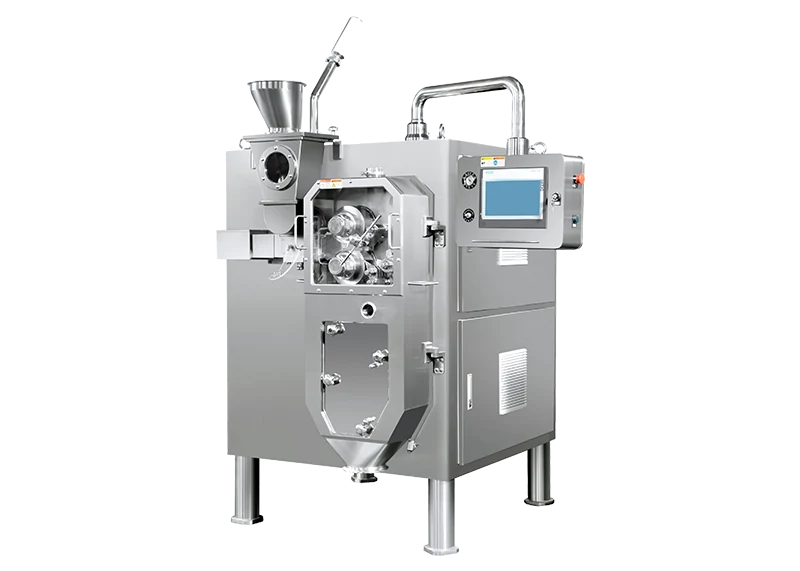
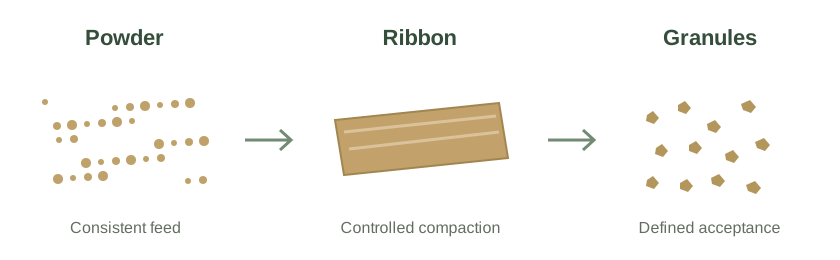
Feeding, compaction and size reduction work together. Evaluate the finished granules in the process they will enter next.
01 / MATERIAL FIT
Bring a representative powder and a measurable objective.
Identify poor flow, low bulk density, entrained air or inconsistent feeding. Record the current powder behavior and the downstream problem you want to solve.
Review composition, moisture, particle-size distribution, bulk and tapped density, stickiness and handling sensitivities. Test ribbon formation, sticking and temperature rise with your actual formulation.
For capsule filling, evaluate feeding and fill-weight consistency. For tableting, assess tablet strength, friability and the product tests your team requires. For sachets, assess dosing and segregation.
02 / REQUIRED OUTPUT
Catalogue throughput starts the discussion. Net running time and the fraction accepted after the agreed checks determine how much feed capacity your process needs.
Required feed rate = accepted shift target ÷ net running hours ÷ accepted mass fraction. The estimate excludes recycle loops and does not calculate hopper volume, cooling duty or installed power.
03 / PROCESS CONTROLS
Record the settings and the result together, so a trial can support a purchase decision.
04 / QUOTATION SCOPE
Have each quotation mark equipment and services as included, optional or customer-supplied, with quantities and connection responsibilities.
Confirm the supplied crusher, product collection and any separately quoted screening or material-return equipment.
05 / FACILITY & CHANGEOVER
Use a configuration-specific layout and utility schedule before placing the order.
Use the U.S. configuration of 220 V, 3-phase, 60 Hz as the quotation basis; confirm the supplied machine and each auxiliary load. The GZL-150H manual describes water-cooled rolls: a dry product path can still require a separate cooling-water circuit.
Check doorways, shipping size, floor loading, operating clearance, service access and lifting arrangements. Agree on feed height, collection height and the route between containers and downstream equipment.
Review how screws, rolls, crusher parts and seals are accessed or removed. Agree on cleaning, drying and reassembly methods for your product; request a demonstrated changeover and the applicable instructions.
Share the material handling information and any combustible-dust or exposure requirements for configuration review. Identify extraction, grounding and room-condition responsibilities before finalizing the equipment scope.
06 / MATERIAL TRIAL & ACCEPTANCE
Arrange a San Diego material trial by application. Confirm the available machine, sample quantity and test scope before sending material.
Discuss a material trial ↗Record formulation or sample identity, preconditioning, moisture, feed density, available quantity and handling instructions. Define the trial machine and configuration.
Agree on run duration, start and stop boundaries, sampling intervals and settings to record. Observe stable feeding, ribbon formation, buildup, leakage and product temperature.
Weigh fresh feed, collected output, the accepted size fraction, fines, oversize and retained material as applicable. State the sieve apertures and test method; a mesh number alone does not fully define the target.
Check the agreed granule density, flow and downstream performance. Summarize results, open items and the FAT and site-acceptance responsibilities in writing.
07 / MACHINE REFERENCES
Explore the current catalogue, then compare proposed models against the same powder, accepted output and equipment scope. Model numbers alone do not establish a capacity ranking.
Explore the confirmed four-stage working illustration.
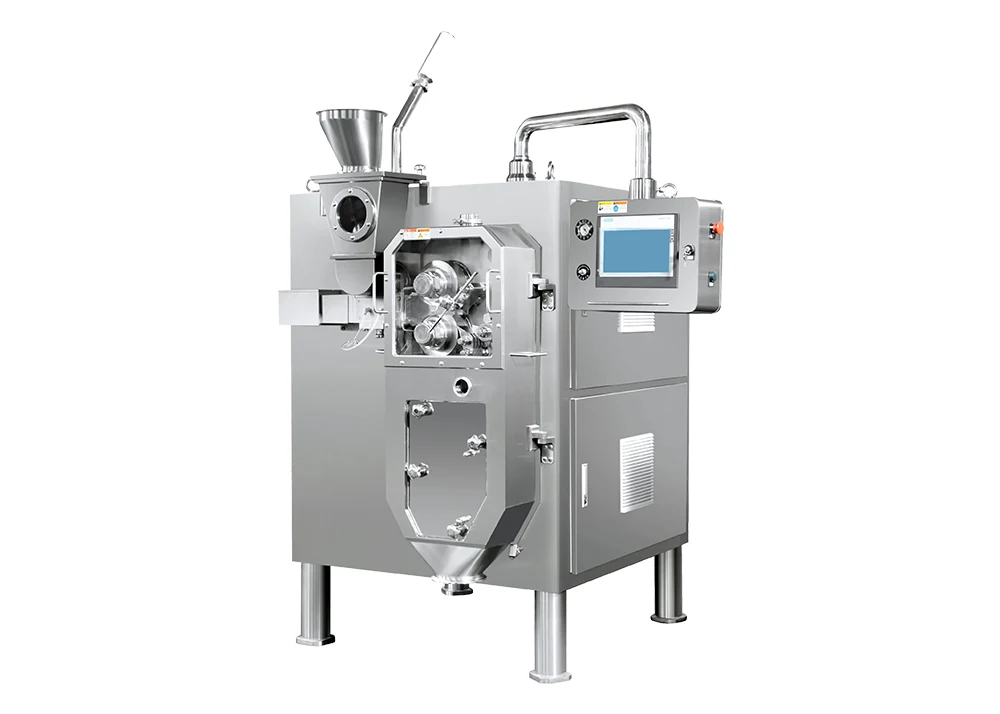
Explore GZL-150H ↗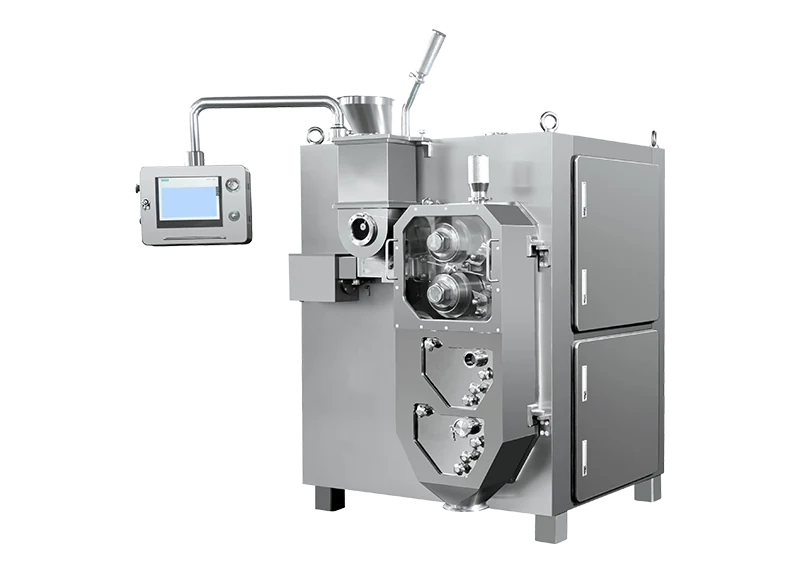
Review the proposed configuration against your material.
Explore GZL-200H ↗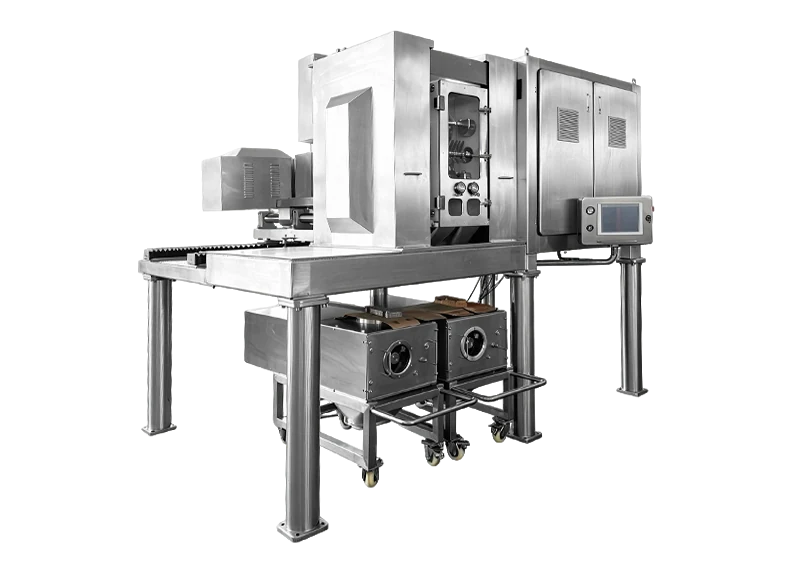
Discuss the process scope and required output.
Explore GZL-1000 ↗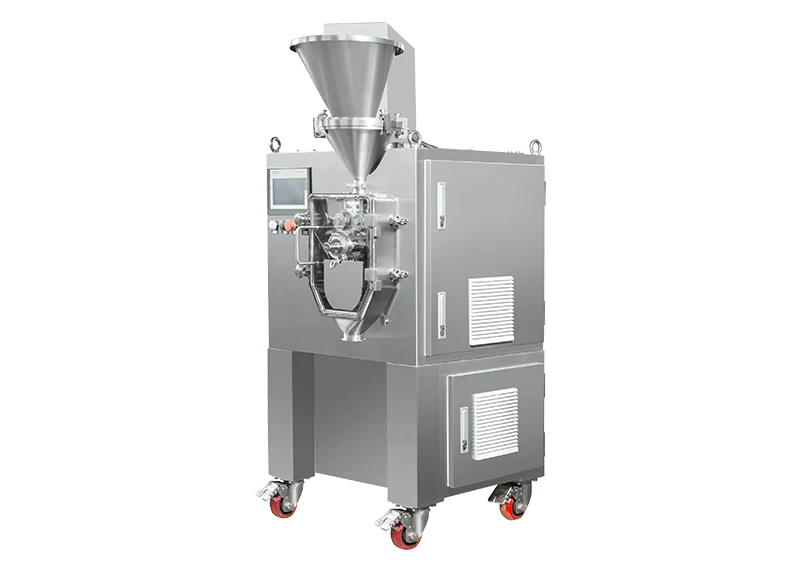
Request a configuration and application review.
Explore GYC-80 ↗Photographs are catalogue references. Final capacity, power, dimensions, supplied configuration and performance conditions belong in your agreed quotation.
08 / REQUEST A QUOTATION
Fill in what you know. Leave unknowns open for a technical review.
Download RFQ checklist ↗Editable TXT · No submission required
BEFORE YOU ORDER
Use catalogue output to begin a shortlist. Confirm the test powder, configuration, net running time and first-pass accepted recovery. Compare the output meeting your agreed granule requirements.
No liquid binder is added to the powder in the illustrated GZL-150H process. The manual describes separate cooling water for the rolls. Confirm the cooling circuit and site connections for your supplied configuration.
Only if the quotation explicitly includes them. The confirmed GZL-150H working illustration shows screw feeding, compaction, a cutter-and-tooth crusher and discharge. Agree on any separate classification or return system.
Set the compaction conditions around the formulation and downstream product tests. Assess granule properties and tablet performance together; greater densification alone is not an acceptance criterion.
Discuss your application with Encap first. The team will confirm the suitable available equipment, material quantity, handling requirements and demonstration or trial scope before your visit.
Define installation, commissioning, training, acceptance assistance, wear parts and warranty responsibilities. Encap maintains San Diego spare-parts inventory for equipment it supplies; confirm the specific parts and availability for your selected machine.
WE SPEAK THE LANGUAGE
Talk with our San Diego team about your material, required granules and complete equipment scope.
Machine-specific descriptions follow the GZL-150H operating manual and Encap’s confirmed four-stage configuration. Final requirements are reviewed for the equipment in your quotation.
General process and trial-planning references: Alexanderwerk: material trials, Fitzpatrick: roll compaction process variables, and Research on granule and tablet properties across roll compactors. These describe general selection considerations; other manufacturers’ features and performance are not Encap specifications.