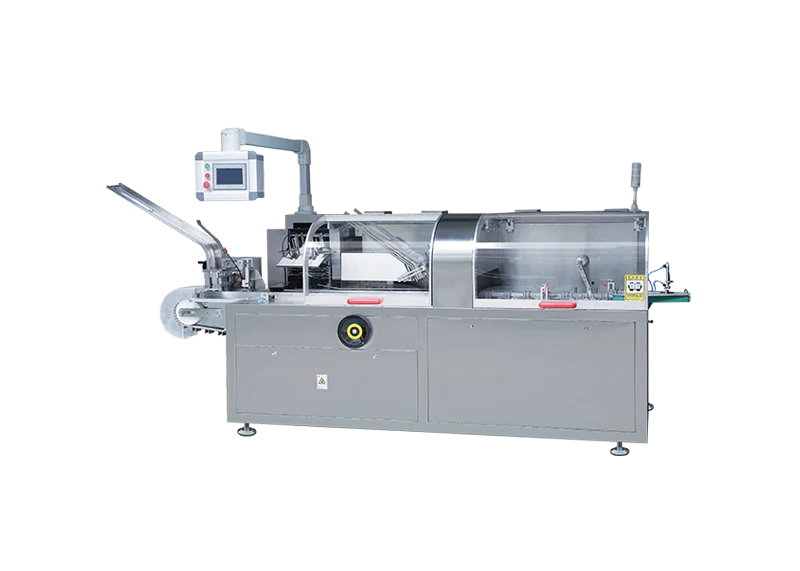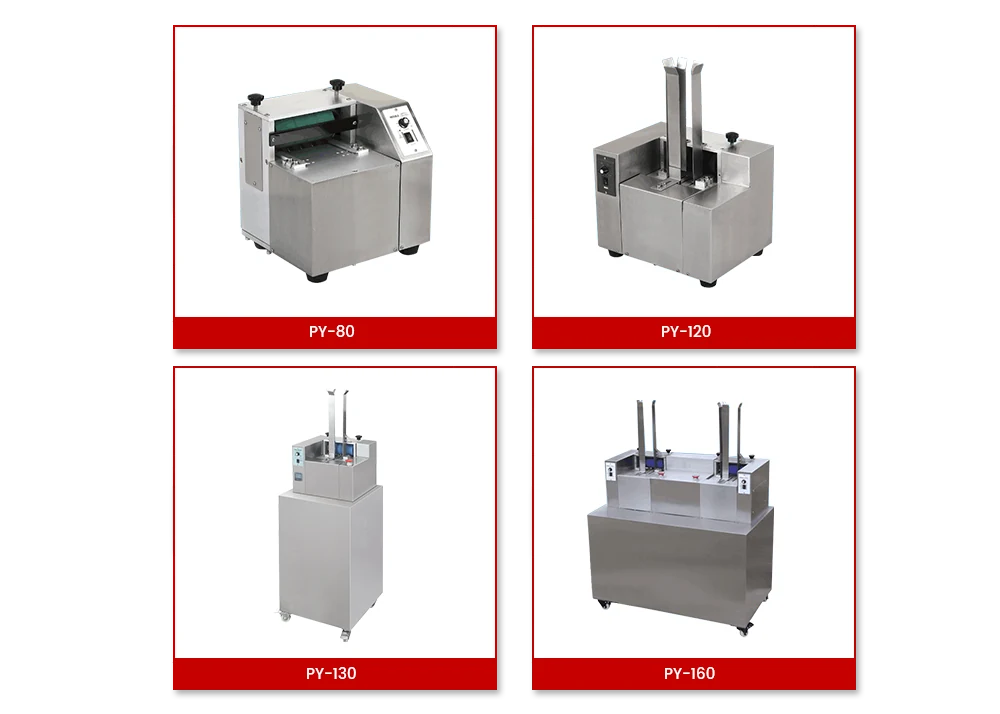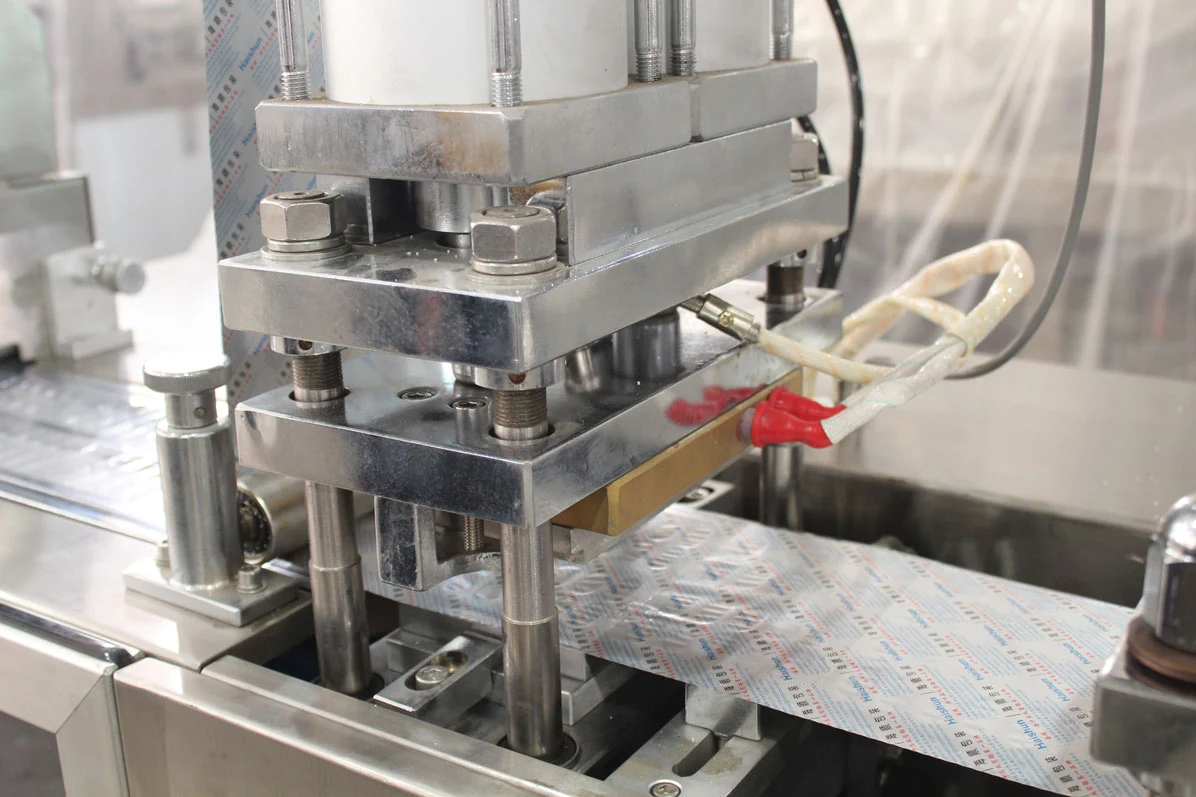
Forming and sealing path
Review the tooling station, web alignment and inspection access for the selected package format.

Blister Packing
Form pockets, feed the product and seal the lidding material into finished blister cards. Select the forming method, feeder and tooling for your tablet or capsule format.
A CLOSER LOOK
Review the equipment photographs alongside the application, access and changeover requirements for your process.
Review the tooling station, web alignment and inspection access for the selected package format.
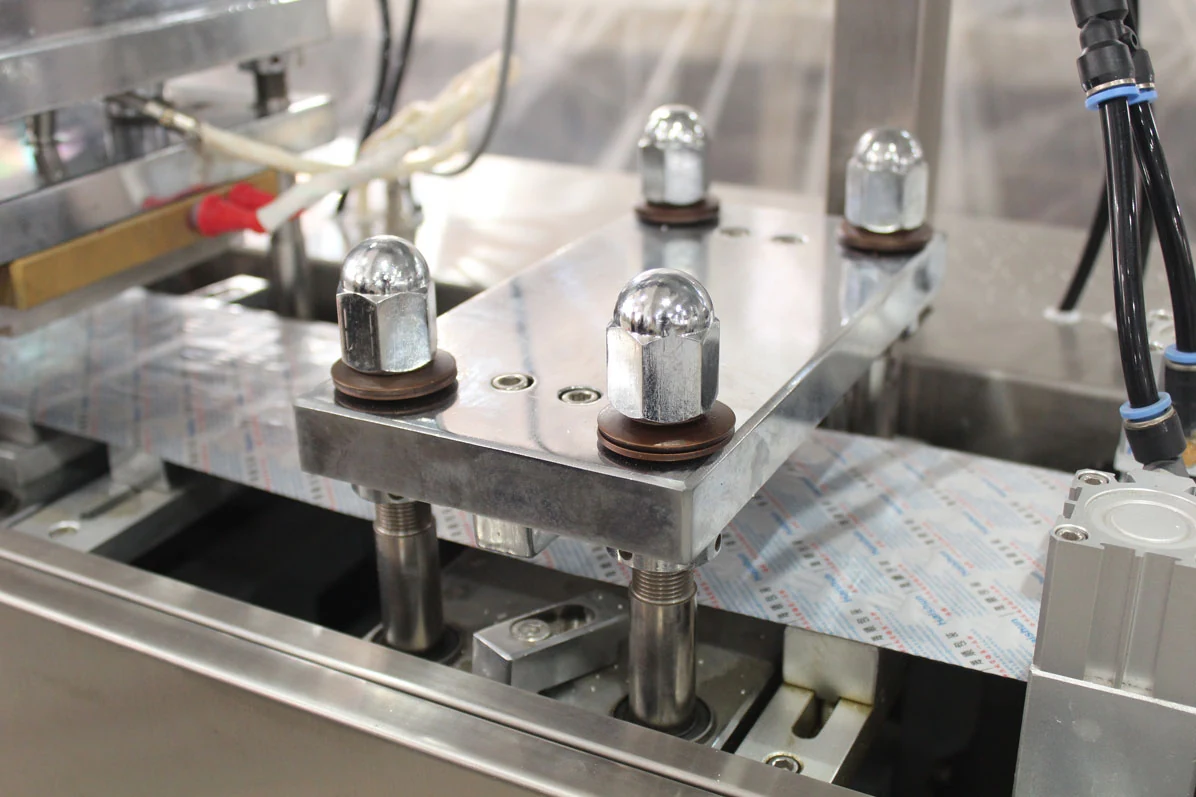
Review the web path, change parts and access along the packaging stations.
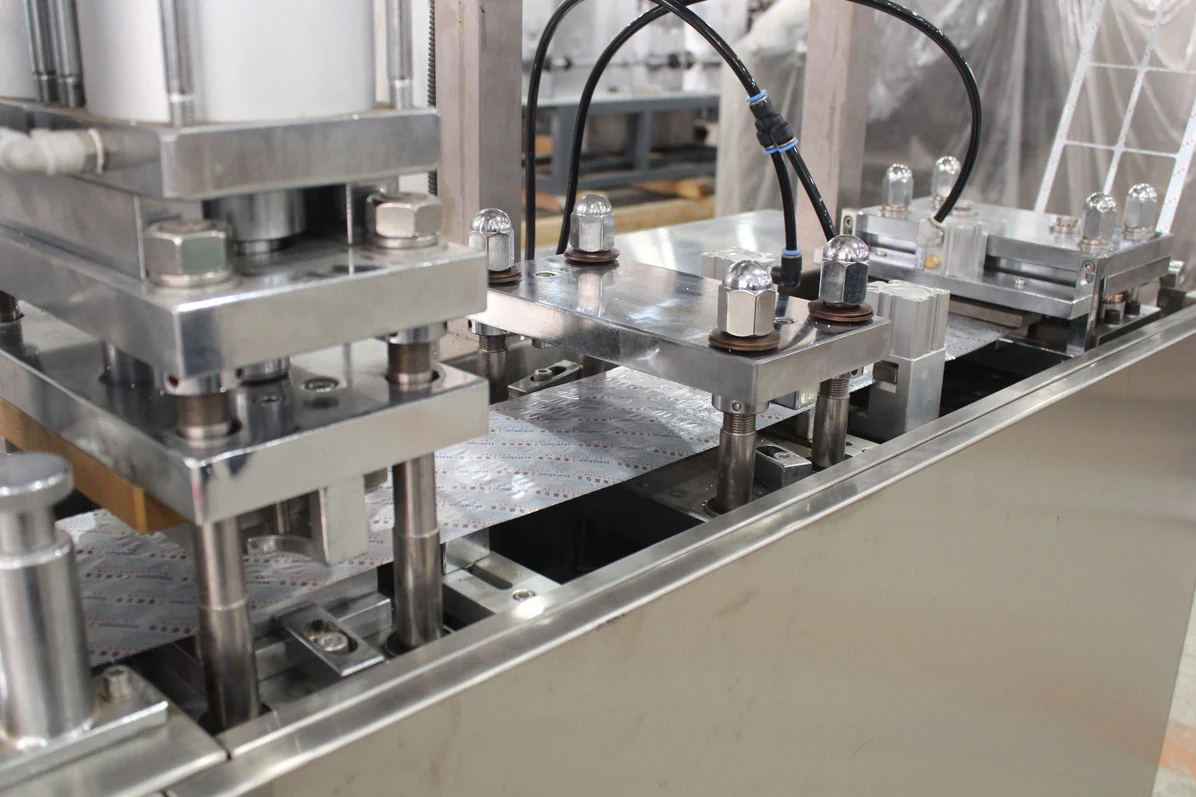
Review how the selected stations are arranged for your forming web and lidding material.
Catalogue equipment photographs; the selected model, tooling and appearance are confirmed with your quotation.
WORKING PRINCIPLE
Explore the six-stage animation on our category page, including ALU/PVC pressure forming and ALU/ALU mechanical cold forming.
CHOOSE YOUR BLISTER FORMAT
Balance protection, pack size and production requirements. The forming web, lidding foil and tooling work together; material choice belongs in the machine-selection discussion.
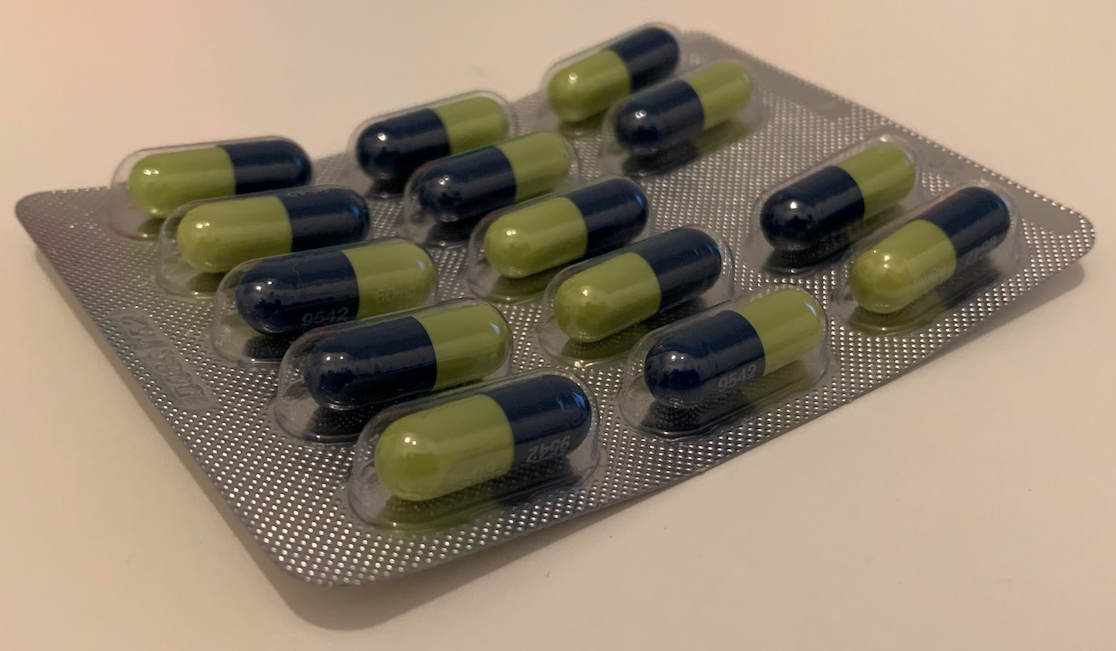
Thermoformed blister
A PVC forming web makes the pockets; aluminum foil closes them. Clear PVC offers product visibility and flexible cavity layouts.[2]
Transparent blister reference; the photographer does not identify the polymer grade. Photo: Michiel4 · CC BY-SA 4.0 · unmodified.
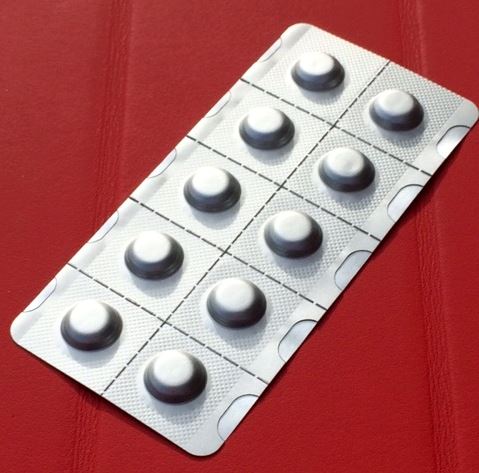
Cold-formed blister
An aluminum-containing laminate makes the pockets; aluminum foil closes them. The intact aluminum layer provides very high protection against moisture, oxygen and light.[1]
Cold-form blister reference. Photo: Michiel4 · CC BY-SA 4.0 · unmodified.
Reference photographs illustrate pack appearance. They are not Encap production samples or evidence of a specific material specification.
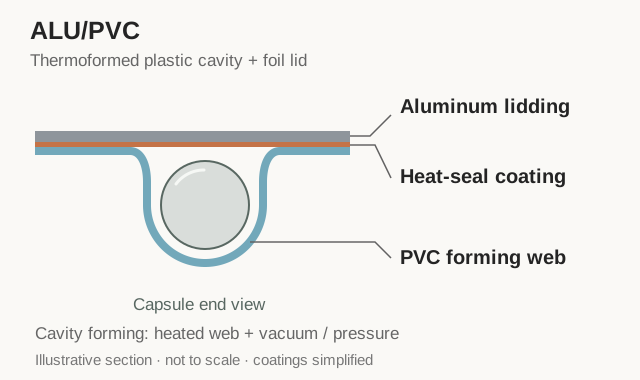
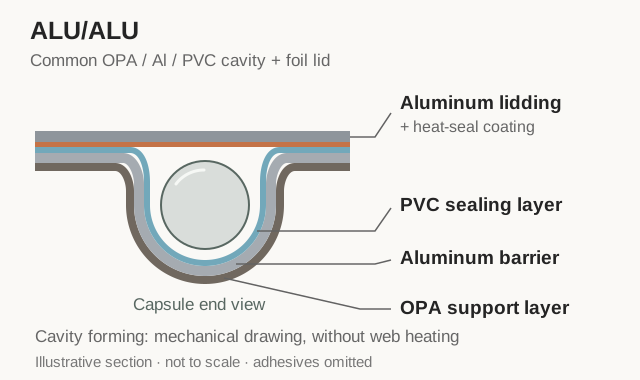
Encap explanatory illustrations · not to scale. Adhesives and surface coatings are simplified. Final materials, gauges and cavity geometry are selected for the package.
Scroll across to compare formats →
| Consideration | ALU/PVC · plain PVC | ALU/ALU · cold form |
|---|---|---|
| Forming method | Heat softens the plastic web before vacuum / pressure forming. | A mechanical tool draws the laminate into cavities without heating the forming web.[5] |
| Moisture & oxygen | Plain PVC has a comparatively limited barrier. Enhanced polymer structures are a separate choice. | The intact foil layer offers a very high barrier. Forming defects and seal integrity still matter.[1][4] |
| Light & visibility | A clear web lets the customer see the product; it does not provide the opacity of foil. | Opaque aluminum shields the product from light and hides it from direct view.[1] |
| Cavity layout & pack size | Can support compact layouts and close cavity spacing. | Conventional cold-form geometry can require more area. Draw depth, radii and laminate grade determine the final footprint.[4] |
| Production rate | Often permits a higher cycle rate on a comparable machine and format. | Often runs at a lower cycle rate. Check the actual model, cavities per cycle and demonstrated settings.[6] |
| Cost considerations | Plain PVC is generally an economical starting point. Include material usage, tooling and output in the comparison. | Often involves higher material / tooling cost. Pack area, setup waste and accepted output determine total cost per pack.[4] |
| Selection starting point | Consider it when a clear, compact pack meets your product’s protection requirements. | Consider it when product sensitivity calls for stronger moisture, oxygen or light protection.[1][3] |
PVDC-coated PVC and PCTFE laminates offer enhanced-barrier thermoforming options. Their performance differs from plain PVC; review the exact film grade, tooling and sealing compatibility.[3]
“Cold form” describes how the cavity is made. The selected lidding foil is still heat-sealed to the compatible inner layer of the forming web.[2]
ON THE EQUIPMENT YOU ARE SELECTING
These are catalogue ranges for the DPP-260, not a universal speed ratio. Blisters per minute also depend on blisters per cutting cycle, the product, feed system and selected format.
Compare the DPP model specifications ↓Bring your product dimensions, protection requirements, film specification and target output. We can review the forming configuration, tooling and trial goals together. Shelf-life suitability needs product-specific stability evidence.
Reviewed October 19, 2026. Summary and drawings by Encap; generalized material differences are not package test results. No universal WVTR, OTR or shelf-life value is assigned.
Photographs by Michiel4, via Wikimedia Commons: Pharmaceutical Blister Pack and Cold Form Foil blister pack2. Both are used unmodified under CC BY-SA 4.0. Their authors do not endorse Encap.
Review forming materials, product feeding, tooling, accepted output and the evidence to collect in a trial.
CONFIGURATION & SELECTION
DPP-140 / DPP-250 / DPP-260 / CONFIGURATION REFERENCECatalogue selection reference. Output depends on the product, tooling and operating conditions. Final specifications, utility loads and supplied options are confirmed for the machine in your quotation.
| Model range | DPP-140 / DPP-250 / DPP-260 |
|---|---|
| Speed interpretation | Cutting cycles/min; cards and pockets per cycle depend on tooling |
| US three-phase configuration | 220V, 3-phase, 60Hz; connected loads confirmed in quotation |
COMPARE CONFIGURATIONS
Compare catalogue model references. Confirm the selected model and demonstrated results for your product before ordering.
Scroll across to compare models →
| Model | DPP-140 | DPP-250 | DPP-260 |
|---|---|---|---|
| Cutting Frequency (times/min) | ALU-PVC: 10-50 ALU-ALU: 10-25 | ALU-PVC: 6-50 ALU-ALU: 6-25 | ALU-PVC: 6-70 ALU-ALU: 6-50 |
| Adjustable Travel Range (mm) (Can be customized) | 40-140 | 40-160 | 0-220 |
| Max. Forming Area (mm) | 140×130 | 240×150 | 240×150 |
| Max. Forming Depth (mm) | 26 | 26 | 26 |
| Air Pressure (MPa) | 0.4-0.6 | 0.4-0.6 | 0.4-0.6 |
Catalogue references · Capacity, output and operating settings depend on the selected format and product. Final parameters are confirmed in your quotation.
SUPPORT THROUGH PRODUCTION
Practical support from selection through production. Services, scheduling and responsibilities are agreed for your project.
Review the application, equipment scope, FAT and delivery plan before the machine ships.
Discuss your projectArrange installation assistance, commissioning, operator training and production coaching.
Explore startup supportTalk with our San Diego team about maintenance, troubleshooting, parts and repair.
Ask for technical supportPLAN THE NEXT STEP
Explore related equipment, then review which items belong in your project scope with our team.
EQUIPMENT FINANCING
Ask about financing for an eligible equipment purchase, with an equipment quote and payment terms reviewed together.
Financing is subject to approval and program availability.
Confirm the exact model, current configuration, utilities and included equipment with our team before ordering.
Download catalogue spec sheet (PDF) · 4.0 MB