ENCAP NORTH AMERICA
Encap North America — Packaging | Servicing | Equipment

BUYING GUIDE / BLISTER PACKAGING

Blister packaging machine
buying guide.

Start with the product and the finished blister card. Match forming materials, lidding, feeding and tooling, then compare accepted output and the complete installation scope.

BLISTER PACKAGING PRODUCT / MATERIAL / FORMAT / CONFIGURATION
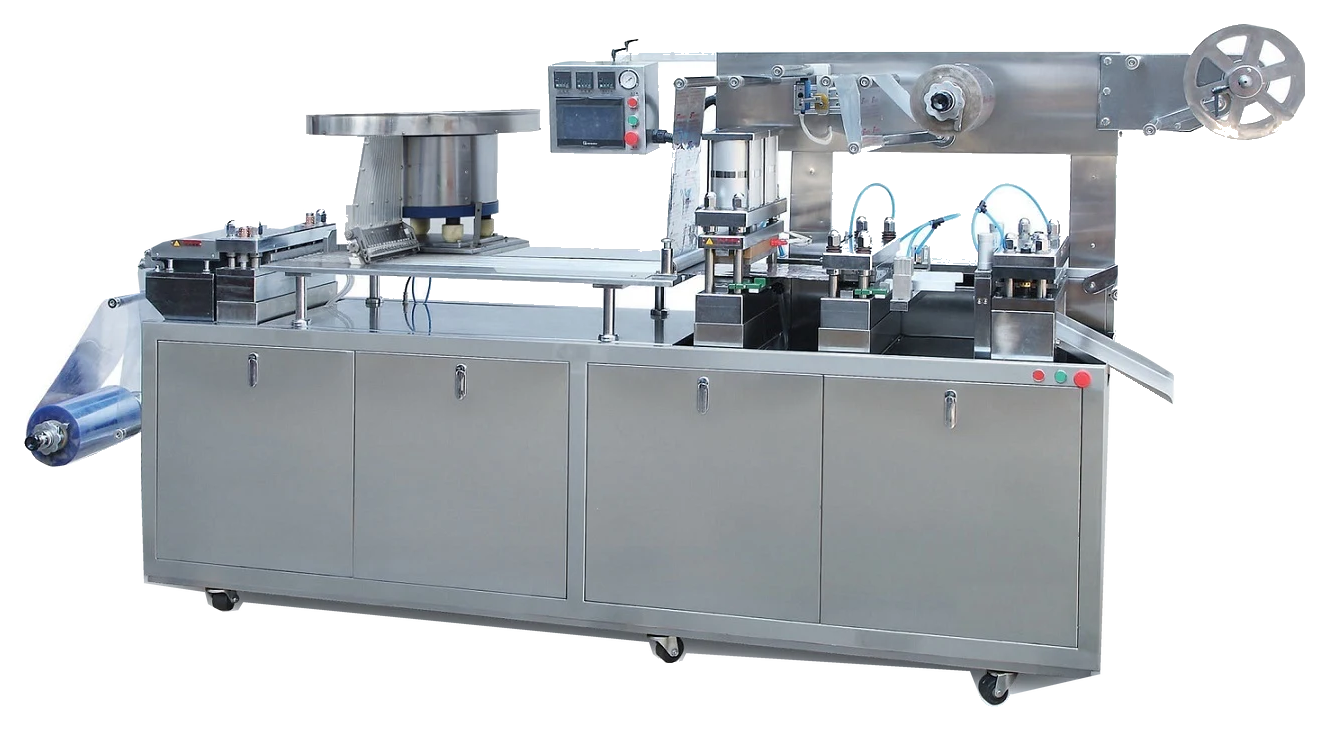
Blister packaging equipment with forming, feeding, sealing and cutting stations
Catalogue equipment reference. The forming method, feeder and supplied tooling are selected for your package.

Define three things before comparing machines.

  1. The package.Product protection, forming web, lidding foil and finished card drawing.
  2. The output basis.Accepted cards per shift, cards per cutting cycle and filled pockets per card.
  3. The evidence.Your product, actual packaging materials, agreed tests and written acceptance criteria.

This guide covers blister packaging equipment for tablets, capsules and other products reviewed for the selected feeder and format. Specify strip packaging separately when that is the intended package.

ALU/PVC & thermoforming

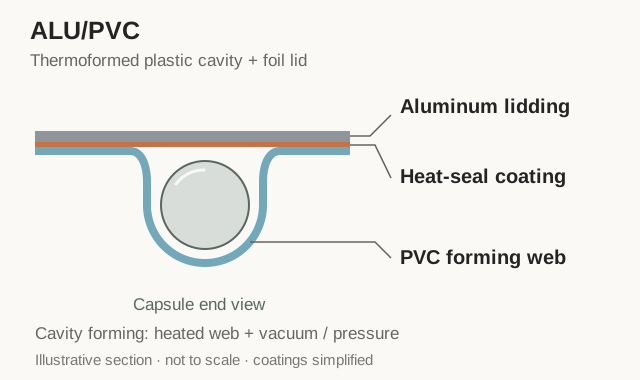
Encap illustration of a PVC blister cavity closed with aluminum lidding

A plastic forming web is heated and formed into pockets, then closed with the selected lidding material. Clear constructions can provide product visibility.

Plain PVC, PVDC-coated structures and PCTFE laminates have different barrier and processing requirements. Specify the film grade, structure and thickness.

ALU/ALU & cold forming

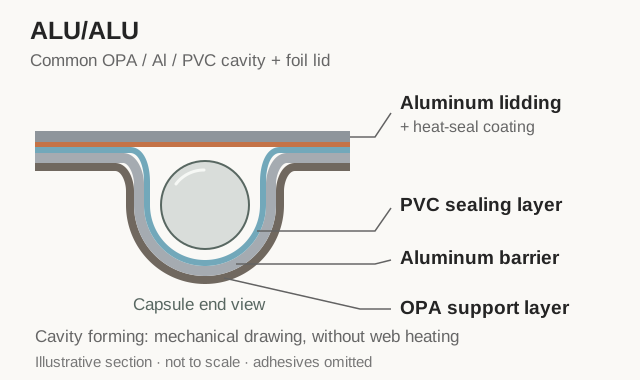
Encap illustration of an aluminum-containing cold-form laminate closed with aluminum lidding

An aluminum-containing laminate is mechanically formed into pockets. A common construction is OPA/aluminum/PVC; other structures are available.

Review cavity depth, radii, spacing and forming behavior with the laminate supplier. Conventional cold-form blisters still require a compatible lidding-seal process.

Encap explanatory drawings · Not to scale · Coatings and adhesives simplified. Final layers, gauges and geometry are defined in the packaging specification.

Set protection requirements for the finished package.

Ask your packaging team to define moisture, oxygen and light protection requirements. Request material data with test conditions, then establish forming, seal-integrity and product-stability evidence for the actual pack.

Explore the material comparison and references ↗
Product behavior
Provide dimensions and tolerances, shape, coating, fragility, dust, static or sticking concerns. Include representative samples and the required product orientation in each pocket.
Pocket & card layout
Define cavity dimensions, clearance, draw depth, cavity count, spacing, seal lands, card edges and any perforations. Identify forming-web travel direction and the finished card dimensions.
Feeding & inspection
Confirm the feeder arrangement with your product. Define checks for empty or incorrectly filled pockets, damaged product and visible contamination where required, plus the agreed reject handling.
Web & print registration
Record forming-web and lidding widths, reel dimensions, core sizes, winding direction, printing and registration marks. Confirm coding areas and the supplied registration and inspection functions.
Count cards per cut separately from pockets per card.

Ask for a format drawing stating how many complete cards are released per cutting cycle. Each card may contain several product pockets. Use those two quantities separately when calculating output.

03 / OUTPUT PLANNING

Turn the shift target
into a cutting-rate requirement.

Work from accepted blister cards. Allow time for setup and stops, then use the selected format’s cards per cutting cycle to estimate the required rate.

ILLUSTRATIVE VALUES / CONFIRM THE FORMAT WITH YOUR SUPPLIER

Enter the accepted-card fraction at your agreed inspection point. Non-running time is deducted separately. The product count assumes one product in each filled pocket of an accepted card.

Available running time—hours/shift
Required gross card output—cards/hour
Required cutting rate—cutting cycles/minute
Products in accepted cards—tablets or capsules/shift

This is a planning requirement. Confirm achievable output with the actual product, films, feeder, tooling and acceptance method.

Running hours = shift hours − non-running hours.
Gross cards/hour = accepted shift target ÷ running hours ÷ accepted fraction; rounded up to a whole card.

Cutting cycles/minute = gross cards/hour ÷ cards per cutting cycle ÷ 60; rounded up to 0.1 cycle/minute.
Accepted product count = accepted cards × filled pockets per card.

DPP catalogue references
ModelALU/PVC cutting cycles/minALU/ALU cutting cycles/minMaximum forming area
DPP-14010–5010–25140 × 130 mm
DPP-2506–506–25240 × 150 mm
DPP-2606–706–50240 × 150 mm

These are existing catalogue references. Forming area is an equipment envelope; cavity geometry, seal lands and card layout require format review. Cards per cut, product feeding, material grade and operating conditions affect accepted output.

Review current DPP specifications ↗
Specify the conversion scope when buying two formats.

For ALU/PVC and ALU/ALU production, obtain a written list of forming equipment, tools, feeders, change parts, adjustments and utilities required for each format. Record which items and tooling sets are included.

05 / PROCESS & LINE SCOPE

Connect the package
to the rest of the line.

Define every transfer and scope boundary, including the materials, product, rejected cards and accepted packs.

Forming webReel supply, forming method and pocket tooling
Product & liddingFeeding arrangement, compatible foil and registration
  1. Form pocketsSelected thermoforming or cold-form process
  2. Fill & checkProduct placement and specified inspection
  3. Seal & finishSealing, coding and cutting as configured
  4. Reject & transferAccepted-card handling and downstream packing

Process concept · Station order, inspection devices, coding and reject equipment are confirmed for the selected machine.

Define the machine supply.

  • Forming, sealing and cutting tools for each format
  • Product feeder and product-contact change parts
  • Registration, coding, inspection and rejection scope
  • Web handling, scrap collection and accepted-card discharge

Define the downstream handoff.

  • Card counting, stacking and transfer requirements
  • Cards per carton, leaflet and carton specifications
  • Cartoner speed and buffer arrangements
  • Separate product-recovery or deblistering requirements
Explore cartoning equipment ↗
Formed pockets
Review geometry, product clearance, distortion and visible forming damage with the actual web. Establish the checks needed for the selected material and intended protection.
Sealing & print
Agree on seal-integrity and appearance checks, sample locations and acceptance criteria. Confirm compatible seal surfaces, operating settings, readable codes and print registration.
Inspection & reject
Demonstrate the specified detection and rejection functions with agreed challenge samples. Identify the reject point, card tracking, collection and count reconciliation in the acceptance plan.
Cleaning & changeover
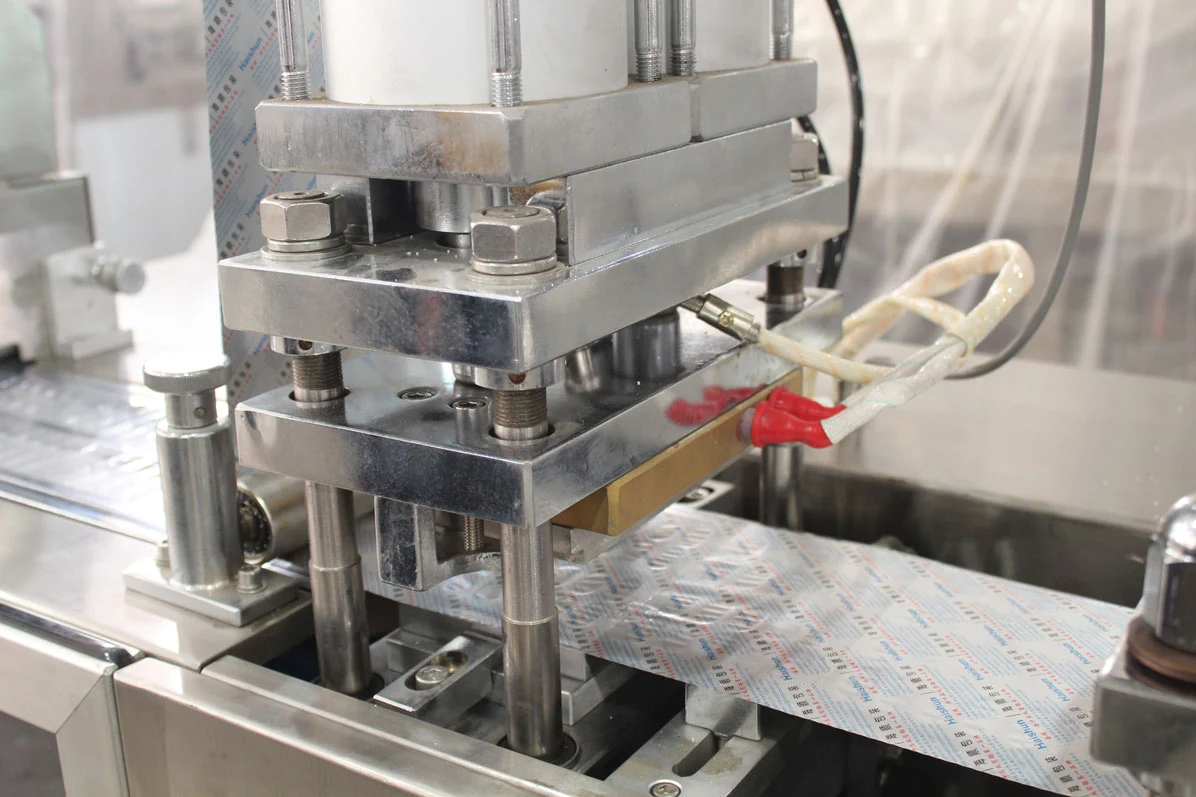
Demonstrate access to feeders, guides, tools and contact parts. Review cleaning, reassembly, setup checks and the first accepted cards after a product, material or format change.

Request an itemized tooling list and the required manuals, drawings, material records and spare-part information. Confirm the actual controls, alarms, records and documentation supplied.

Utilities & access

The current DPP product page lists a U.S. three-phase configuration of 220 V, 3-phase, 60 Hz. Confirm each supplied circuit and auxiliary load.

Obtain compressed-air pressure and flow, cooling or water requirements where applicable, ventilation and room-condition information. Check reel-loading access, service clearances, floor loading and the installation route.

Total purchase & operating cost

Include tooling sets, feeders, coding and inspection, downstream equipment, freight, unloading, site connections, commissioning and training.

Compare material use per accepted card, setup scrap, rejected packs, product loss, staffing, cleaning, changeovers and routine wear parts. Agree on warranty, parts and service responsibilities in writing.

Compare quotations against one common brief.

Use the same product, card drawing, material grades, accepted-output target and supplied options. Record quantities, exclusions, delivery basis, price validity, payment terms and startup responsibilities.

  1. 01

    Identify the exact trial inputs.

    Record product and material identities, forming and lidding specifications, card drawing, tooling, feeder, sample quantities and conditioning or handling requirements.

  2. 02

    Define run and measurement boundaries.

    Record cutting cycles, complete cards per cut, run duration, stops, gross cards, rejects and accepted cards. Note startup scrap, material changes and the agreed sampling intervals.

  3. 03

    Inspect the finished cards.

    Use agreed methods for cavity shape, product condition, filling, seals, codes, print position and card dimensions. Demonstrate the supplied rejection functions and downstream transfer where included.

  4. 04

    Close the results and open points.

    Prepare a written trial result with sample identity, settings, methods and criteria. Define FAT, site acceptance, operator training and any required qualification-document support.

Keep package-performance evidence in the project plan.

Your packaging and quality teams define the remaining barrier, stability and release work for the product. Document the evidence required and who provides it.

  • ProductRepresentative samples, dimensions, shape, coating, fragility, dust and orientation requirements.
  • PackageForming and lidding structures, grades, thicknesses, reels, printed artwork and protection requirements.
  • FormatCard and cavity drawing, pockets per card, complete cards per cutting cycle and required tooling sets.
  • ProductionAccepted cards per shift, net running hours, accepted-card fraction, batches and changeovers.
  • Scope & facilityFeeding, inspection, coding, rejection, cartoning, utilities, layout and connection responsibilities.
  • AcceptanceTrial inputs, methods, criteria, FAT, documents, installation, training and support responsibilities.
Discuss a configured quotation ↗

BEFORE YOU ORDER

Common buying questions.

Is 70 cutting cycles per minute the same as 70 cards per minute?

Multiply cutting cycles by the complete cards released per cutting cycle for the selected format. Apply the agreed accepted-card fraction and available running time when planning accepted output. Pockets per card determine the product count inside those cards.

Can the same ordered machine run ALU/PVC and ALU/ALU?

Confirm both configurations in the quotation. Ask for the forming equipment, tools, feeder parts, operating changes and utilities needed for each package, together with evidence for your product and materials.

Does cold forming remove the sealing requirement?

Cold forming describes the mechanical formation of the aluminum-containing base laminate. Conventional ALU/ALU blister packaging still uses a compatible lidding-seal process. Confirm the material combination and the sealing conditions for the supplied system.

Is the highest-barrier material always the right purchase?

Define the product’s protection requirements and compare the complete pack, forming behavior, card footprint and operating cost. Have your packaging team review product-specific barrier and stability evidence for the proposed package.

What should be included in a format-change kit?

List the forming, sealing, cutting and product-feeding parts required for the new layout, plus any guides, registration, coding or inspection adjustments. Confirm supplied quantities and demonstrate changeover and restart with the selected format.

Is strip packaging the same equipment decision?

Strip packaging encloses the product between sealing webs, while a blister format uses formed cavities. Specify the intended pack, product arrangement and opening requirements so the correct forming, feeding and sealing system can be reviewed.

PLAN THE NEXT STEP

Bring the product.
Define the package.

Share the card drawing, packaging materials and accepted-output target with our team to review the machine, tooling and trial scope.

Discuss your blister project ↗Explore all buying guides ↗
Material and forming references

General material and forming considerations draw on Bilcare’s packaging constructions, kp’s barrier-film portfolio and Constantia Flexibles’ cavity-forming considerations. Machine figures follow the current Encap DPP catalogue page. Supplier features and material data require confirmation for the ordered package.