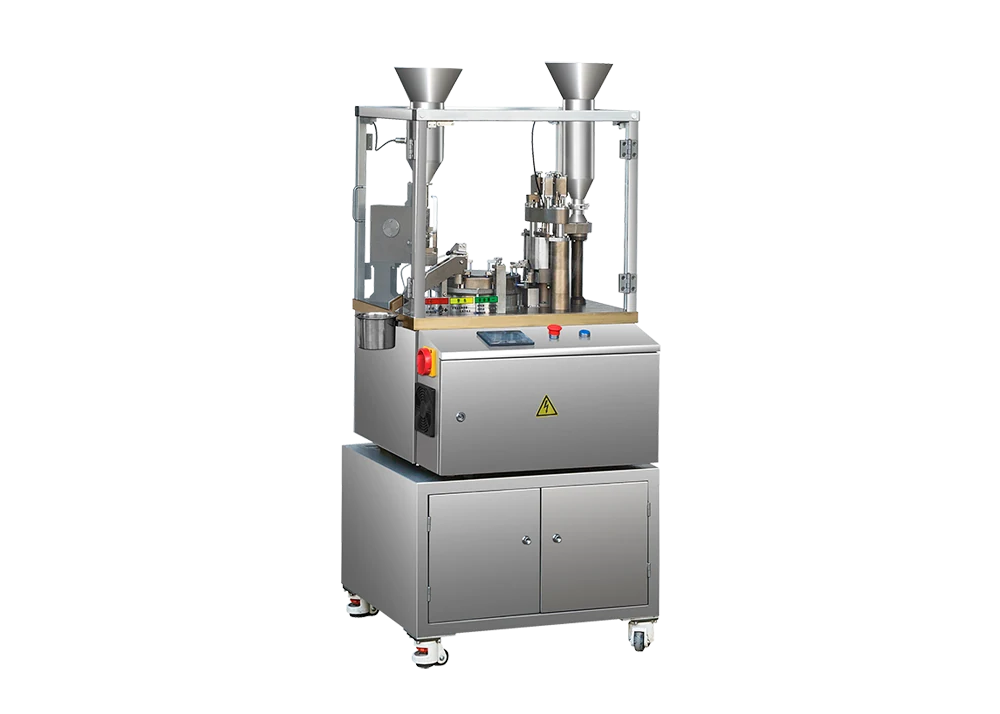
SMALL-BATCH REFERENCE
NJP-120C
7,200 capsules/hour
Catalogue rated maximum. Review the batch workflow and selected tooling.
View model
BUYING GUIDE / HARD CAPSULE PRODUCTION
Choose a capsule filler around your formulation, daily output and operating routine. Compare automation, plan the complete setup and prepare for a useful material trial.
Start with three decisions.
This guide focuses on two-piece hard capsules. Liquid-filled hard capsules and banding need a separate process review. Softgel encapsulation uses a different production process.
Review the complete operator cycle: loading, filling, checks, replenishment and cleaning.
| Approach | A useful starting point when… | Check before choosing |
|---|---|---|
| Manual filling | Development quantities are small and hands-on preparation is practical. | Labor per batch, consistency of the working method and the time needed to inspect finished capsules. |
| Semi-automatic | You want powered filling with an operator managing the steps between stations. | Operator workflow, transfer and locking steps, repeatability, batch size and capsule-size change parts. |
| Automatic | Recurring production calls for integrated capsule feeding, separation, filling, closing and discharge. | Sustained output with your powder, replenishment, rejects, changeover time and downstream capacity. |
Manual filling is included as a comparison baseline. Explore Encap’s semi-automatic and automatic equipment.
Ask to see a full clean-down and capsule-size changeover. Include the time, parts, tools and operator skill needed to return the machine to production.
See a capsule changeover training example02 / OUTPUT PLANNING
A rated maximum is a catalogue reference. Your purchase needs a sustained run rate that allows enough time for the work around production.
Gross output includes capsules that may be rejected. Verify the achievable running rate and acceptance rate together in a material trial.
The calculation: accepted target ÷ production hours = required accepted rate. Divide again by the accepted fraction to estimate the gross running rate.
Planning arithmetic only. Unexpected downtime, start-up losses, powder behavior and line bottlenecks require their own allowance. The calculator does not select or guarantee a machine.
Two products with the same target weight can behave differently in the dosing system.
Capsule size defines a volume envelope. A target weight in milligrams also depends on the material and the filling method; size alone does not establish a guaranteed fill weight.
Explore the capsule-filling and tamping sequence04 / EQUIPMENT SHORTLIST
Compare a few reference models, then evaluate the selected configuration against the shift plan and your material.
SMALL-BATCH REFERENCE
7,200 capsules/hour
Catalogue rated maximum. Review the batch workflow and selected tooling.
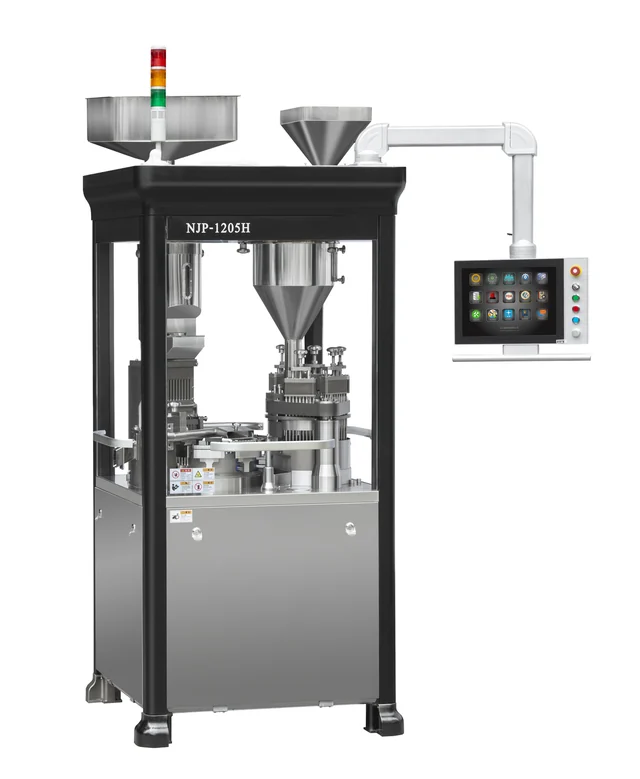
View modelH-SERIES REFERENCE
75,000 capsules/hour
Catalogue rated maximum. Explore dosing access, station cleaning and setup.
View model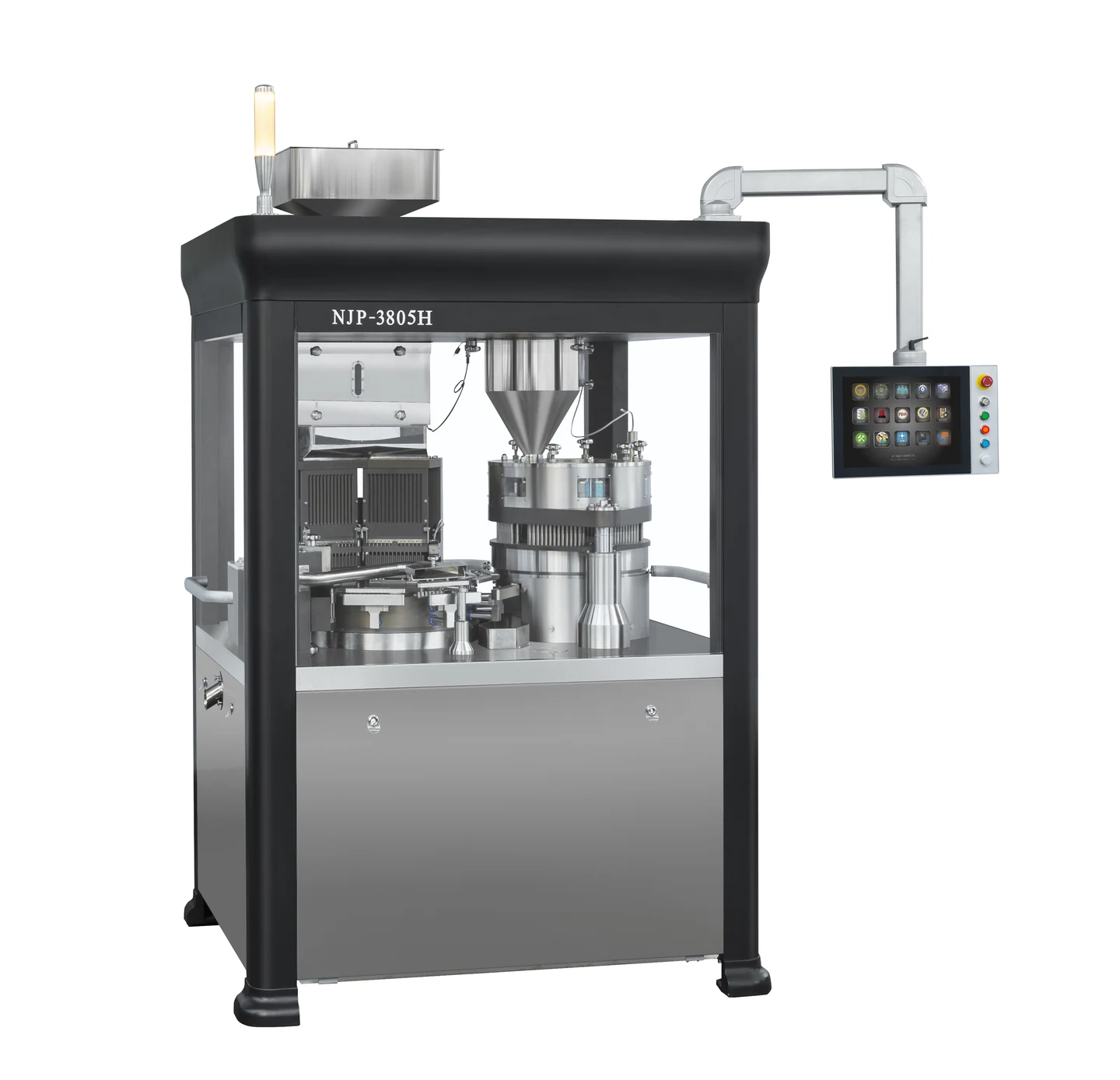
HIGHER-OUTPUT REFERENCE
228,000 capsules/hour
Catalogue rated maximum. Plan replenishment and downstream handling together.
View modelThese are manufacturer catalogue maxima, not demonstrated shift output. Actual results depend on material, capsule format, tooling and operation. Compare the wider automatic range or explore semi-automatic equipment.
Check each machine and auxiliary device against the actual facility supply.
A planning sequence. Inspection, transfer and packaging stages depend on your product and quality requirements.
Encap lists a standard U.S. three-phase configuration of 220V, 3-phase, 60Hz. Confirm the supply for each selected machine and auxiliary device.
A filler’s rated speed does not establish the finished line’s capacity. Check replenishment, transfer, inspection and packaging as a complete flow.
Start with a configured purchase and delivery scope. Then plan the operating costs.
The cost of a capsule filling machine changes with automation, capacity, tooling, inspection and the complete equipment package. Ask for an itemized quotation so that the machine price, delivery scope and startup work are clear.
| Cost area | Clarify in writing |
|---|---|
| Machine & tooling | Exact model/version, capsule-size tooling sets, dosing parts, controls and options. |
| Auxiliary equipment | Vacuum, extraction, loaders, polishing, inspection and downstream packaging. |
| Delivery | Shipping basis, freight, import responsibilities and charges, domestic trucking, unloading and positioning. |
| Startup & training | Installation assistance, commissioning, training, travel, facility work and each party’s responsibilities. |
| Running costs | Labor, changeover and cleaning time, utilities, wear parts, material loss and planned maintenance. |
| After-sales terms | Warranty scope, exclusions, service arrangements, spare parts and expected response process. |
For an ROI discussion, use your own demand, sustained accepted output, staffing and measured time savings. A higher nameplate speed alone does not establish payback.
Explore equipment financingDefine the material, setup, duration and measurements before the trial.
Discuss a material trialShare the formulation, capsule shells, target weight and handling concerns. Agree on sample quantities and handling arrangements with the team.
Identify the model, tooling, machine speed, material replenishment, run duration and operator actions.
Review fill-weight results, capsule separation and closing, rejects, interruptions, visible damage and powder loss using agreed methods and limits.
Review cleaning access, parts removal, capsule-size changeover and the procedure for returning to the next product.
An empty-capsule operational check can support setup and training. A formulation trial evaluates filling behavior. FAT and site acceptance need their own agreed scope, records and acceptance criteria.
Read the changeover training recordAsk which manuals, drawings, material records and qualification support can be supplied for the selected machine. Specify the documents and responsibilities in the quotation; IQ/OQ support and PQ activities are project-specific.
Send the details you know. Identify the open questions so they can be resolved during selection.
Download quotation checklist (TXT)BUYER QUESTIONS
Start with accepted capsules required per shift and the hours available after setup, cleaning and changeovers. Use that running-rate target to shortlist machines, then verify output and fill performance with your material.
Compare labor through the complete batch, product-change frequency and recurring output needs. Review the actual operating and cleaning sequence for both approaches before comparing the investment.
Confirm shell compatibility for the selected model, capsule size and tooling. Use representative shells in the trial to check separation, closing and handling.
The configured price depends on automation, capacity, tooling, options, auxiliary equipment and delivery and service scope. Request an itemized quote and compare the complete installed setup together with operating costs.
Rated maximum output is a catalogue reference. Sustained accepted output also depends on your material, capsule format, settings, rejects, replenishment, stops and downstream handling.
Encap offers onsite demonstrations and material trials in San Diego, California by appointment. Share the material, capsule format, target output and trial objectives so the team can confirm suitable equipment and the scope.
CAPSULE FILLING / PRACTICAL PRODUCTION SUPPORT
Connect machine selection with installation, training and ongoing technical support.